Ten Guests, No Parking: Why Jersey Should Let Couples Marry in Their Parish Hall
A post doing the rounds on Facebook this week made a point worth taking seriously: the Island's civil register office, moved from Royal Square to 25 New Street in March 2024, is not built for the thing most couples actually want from their wedding day. The Ceremony Room at New Street holds a maximum of 12 people, full stop — the couple included. That leaves room for ten guests. Parents, if both sides come, plus witnesses, is most of that gone before a friend gets a seat. New Street itself is closed to general traffic, and the office has no parking of its own beyond a couple of disabled bays. Anyone driving is directed to Minden Place or Pier Road and told to walk. For an 80-year-old grandparent, or anyone with a pram, that is not a detail — it is the difference between coming and not. None of that is a criticism of the office itself. Consolidating registration and ceremonies under one roof after years of them being split apart was a sensible move, and the Superintendent Registrar said as much when it opened. The problem isn't the building doing its job badly. It's that the building was never going to be big enough to be the only free, civic option on the Island.
Look at who else is on the approved list, and who isn't
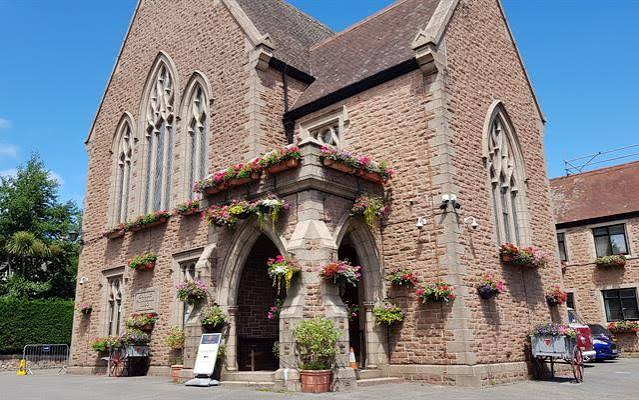
Go through gov.je's list of approved marriage locations and the pattern is obvious. Outside religious buildings, a couple can marry at a National Trust property, a hotel, a manor house, a restaurant, a vineyard, even the zoo — all of them privately run, and all of them charging for the privilege. The only publicly owned, non-religious civic space on the entire list is St Helier's Town Hall. That means every other parish in the Island — Grouville, St Martin, St Ouen, St Peter, Trinity, St Mary, St John, St Saviour, St Clement, St Lawrence, St Brelade — has a Parish Hall that isn't an approved wedding venue at all. These are public buildings, paid for by parishioners, sitting empty most weekday afternoons between Parish Assemblies and the occasional function. Most have a hall big enough for fifty or a hundred guests, a kitchen, accessible toilets, and — critically — a car park.
Why this matters for couples who aren't religious
A couple with a church, chapel or meeting house behind them already has a free, spacious, parish-rooted option for their ceremony. A couple with no religious affiliation — an increasing share of Islanders — is funnelled toward either a ten-guest civic room with nowhere to park, or a private venue they have to pay to hire. That's not a neutral state of affairs. It quietly makes a civil, non-religious marriage the more expensive and more restricted choice, for no better reason than that nobody has updated the approved venue list to catch up with how the Island's beliefs have actually changed.
The case against, fairly put
There are real objections to work through, not just wave away. Parish Halls are run by Connétables and Parish Assemblies, not the Superintendent Registrar, so this isn't a switch central government can flip alone — each parish would need to agree to put its hall forward and manage bookings around its own civic calendar. Some halls double as polling stations, food banks or emergency shelters, and would need clear priority rules. And there's a legitimate question of whether a Ceremony Room needs specific fittings — a registration table, secure storage for documents — that a general-purpose hall doesn't have. None of that is a reason to dismiss the idea. It's a reason to pilot it with one or two willing parishes rather than assume it's straightforward everywhere.
What I'd like to see
The fix doesn't need a new building or a large budget. It needs the Government and the Comité des Connétables to add willing Parish Halls to the approved marriage locations list, on the same basis as any other civic building, and let couples choose a venue that fits their guest list and their parking needs rather than the Ceremony Room's. Jersey's Parish Halls exist because the Island decided, a long time ago, that every parish deserved its own civic space. It seems a natural extension of that idea to let couples use them for one of the most civic moments there is.
Discussion (0)
Log in to join the discussion
No comments yet. Be the first to discuss this article!